Contact Us
If you have an issue or question that requires immediate assistance, you can click the button below to chat live with a Customer Service representative.
Please allow 3 – 5 business days from the time your package arrives back to us for a refund to be issued.
Namkeen Category
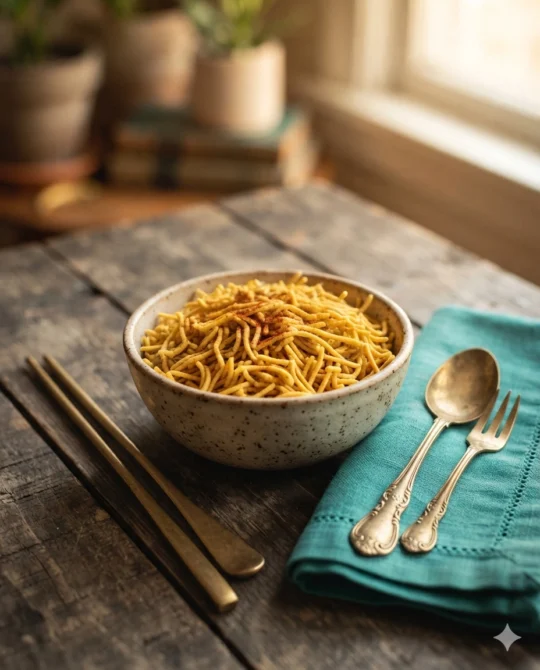
Ratlami Sev
How spicy is Ratlami Sev?
It’s on the milder end of our sev range. Clove, black pepper and carom seeds give it warmth and aroma rather than heat, so it’s a good choice if you enjoy namkeen without a strong chilli kick.
What does the GI tag on the pack actually mean?
Ratlami Sev holds a registered Geographical Indication tag (GI No. 363) issued by the Government of India, confirming its documented link to Ratlam in the Malwa region. It speaks to regional origin rather than taste or quality, but it’s a useful marker if you’re comparing us with generic “mixture” snacks that carry no such designation.
What oil do you fry it in, and are any preservatives added?
We fry it in groundnut oil, and there are no added preservatives or artificial flavouring in this recipe — just gram flour, whole spices and oil, prepared the traditional way.
How long will a pack stay fresh once I get it?
60 days from the date of manufacture, provided it’s kept in a cool, dry place away from moisture and sunlight. Once opened, moving it to an airtight container helps keep the crunch.
Can I use Ratlami Sev as a topping rather than eating it on its own?
Yes. Its mild flavour makes it a popular topping for poha, upma and bhel, where a spicier sev would overpower the dish.
How is Ratlami Sev different from Ujjaini Sev — aren't they both mild?
Both sit at the gentler end of the range, but the seasoning differs: Ratlami Sev leans on clove and black pepper for a warmer, rounder taste, while Ujjaini Sev’s ajwain-and-hing blend gives it a lighter, more savoury edge suited to topping duty.
Does this contain any allergens I should know about?
A full allergen statement hasn’t been supplied yet, so this is currently [INFORMATION REQUIRED]. If you or anyone eating it has a nut, gram flour or spice sensitivity, please check the pack or contact us directly before ordering.
What pack size can I order?
It’s currently available in a 500 g pack. We’ll update this listing if further sizes are confirmed.
Garlic Sev (Lahsun Sev)
Is Garlic Sev one of the spicier options in your namkeen range?
Yes — it’s built for people who want their namkeen to have some punch, with a bold, savoury garlic flavour running through every strand.
Is that a real garlic flavour, or is it a seasoning powder?
It’s real. Fresh garlic paste is worked directly into the gram flour dough rather than dusted on afterwards, so the flavour doesn’t fade in the packet the way a surface seasoning can.
Why does the sev have a golden-yellow colour?
That comes from the turmeric in the spice blend, along with carom seeds and traditional spices — it’s also a handy visual cue for telling it apart from our plainer sev varieties.
What's the best way to serve it?
Most customers enjoy it as a standalone evening snack, ideally with a hot cup of chai to balance the intensity. It also works well stirred into a milder homemade namkeen mix to lift the flavour without adding extra chilli.
How does it compare with Double Laung Sev — both are described as bold?
They’re both at the spicier end of the range, but the flavour direction differs. Garlic Sev is savoury and pungent from fresh garlic; Double Laung Sev gets its intensity from a double measure of cloves. If you’d rather have punch without a garlic-forward taste, Double Laung Sev is the closer match.
Is it suitable if I generally avoid strong garlic flavours?
Probably not — garlic is the dominant note here by design. Ratlami Sev or Ujjaini Sev would suit a milder preference much better.
How long does it keep, and how should I store it?
Keep it in a cool, hygienic, dry place, away from moisture, sunlight, heat and strong odours. The exact shelf-life duration for this specific product hasn’t been confirmed yet, so that detail is [INFORMATION REQUIRED] for now.
What size does it come in, and is there an allergen list?
It’s available in a 500 g pack. A full allergen statement and exact spice list haven’t been supplied yet, so please get in touch if this matters for your order — currently [INFORMATION REQUIRED].
Ujjaini Sev (Poha Sev)
I've seen this called "Poha Sev" elsewhere — is it the same product?
Yes. Ujjaini Sev is widely known by that second name, which reflects its traditional role: it’s the sev most commonly sprinkled over a plate of poha.
Is it spicy, or more of a background flavour?
It’s mild. The blend of ajwain, black pepper and hing gives it a light, savoury character that complements other dishes rather than dominating them.
Can I eat it straight from the pack, or is it only meant as a topping?
It works both ways — plenty of people enjoy it as a light standalone snack, but its traditional and most common use is as a topping for poha, bhel, sev puri and similar chaat-style dishes.
Why is it so thin compared with some other sev varieties?
The strands are pressed especially fine, which is what lets it distribute evenly over poha or a sandwich filling instead of sitting in clumps the way a thicker sev might.
How is it different from Ratlami Sev, since both are described as mild?
They’re close in spice level, but Ujjaini Sev is thinner and leans on ajwain and hing, giving it a lighter, more savoury edge, while Ratlami Sev’s clove-and-pepper blend gives a warmer taste. Ujjaini Sev is the more purpose-built option if topping poha or chaat is your main use.
What oil is used, and are there any preservatives?
Groundnut oil, with no added preservatives or artificial flavouring — it’s made fresh rather than held in long-term storage before packing.
How long does a pack last, and how should I keep it after opening?
60 days from the date of manufacture. Once opened, store it in an airtight container in a cool, dry place, away from moisture and direct sunlight, and don’t refrigerate it.
Is there a full ingredient and allergen list available?
The core ingredients are listed on the product page, but a complete allergen statement hasn’t been supplied yet — that’s [INFORMATION REQUIRED] and will be added once confirmed.
Double Laung Sev
Why is it called "Double Laung" Sev?
Because it’s made with double the usual quantity of laung (cloves) compared with a standard sev, which is what gives it such a strong, aromatic flavour.
Is this the spiciest product in your namkeen range?
It’s one of the two boldest, alongside Garlic Sev. Its intensity comes from the concentration of clove and spice rather than added chilli, so it reads more as aromatic heat than a straightforward chilli burn.
Does it contain onion or garlic?
No — it’s prepared without either, which is worth knowing if you’re following a diet that avoids them. This reflects how the recipe is made rather than a certified claim, so please confirm directly with us if that status needs to be formally verified for your needs.
How should I serve it if I'm new to this level of spice?
Start with a small handful alongside a strong cup of chai, which helps balance the intensity. It also works well shared in small quantities as part of a mixed namkeen platter, where it provides contrast against milder varieties rather than dominating the whole bowl.
How does it differ from Garlic Sev, since both are your boldest products?
Double Laung Sev is built around a heavy clove content for a warm, aromatic spice profile, while Garlic Sev gets its intensity from fresh garlic paste for a more pungent, savoury character. Neither is spicier in a chilli-heat sense — they’re just bold in different directions.
Would this suit someone who normally prefers milder namkeen?
Not really — this is the most strongly spiced product we offer. Ratlami Sev or Ujjaini Sev would be a gentler starting point.
What's the shelf life, and how should it be stored?
Store it in a cool, hygienic, dry place, protected from moisture, sunlight, heat and strong odours. The exact shelf-life duration hasn’t been confirmed for this specific product yet, so that’s currently [INFORMATION REQUIRED].
Is "Double Laung Sev" the same thing as "Indori Sev"?
This naming question hasn’t been resolved yet, so we haven’t used “Indori Sev” as a customer-facing name for this product. If you’ve seen that term elsewhere, please contact us and we can clarify once it’s confirmed internally.
Burhanpuri Sev
What makes Burhanpuri Sev different from the rest of your sev range?
It’s the only one built around fresh herbs rather than clove or garlic. Fresh pudhina (mint) and fresh dhaniya (coriander) go straight into the dough, giving it a green, herbal note you won’t find in Ratlami, Ujjaini, Garlic or Double Laung Sev.
Where does the name come from?
It’s named after Burhanpur, a city in Madhya Pradesh with its own place in the state’s wider namkeen-making tradition, alongside towns like Ratlam, Indore and Ujjain.
Is it spicy, mild, or somewhere in between?
The exact spice level relative to the rest of our range hasn’t been confirmed yet, so that detail is currently [INFORMATION REQUIRED]. What we can say is that mint and coriander give it a fresh, herbal character alongside the underlying spice.
Does it have any texture beyond the usual crisp strands?
Yes — whole coriander seeds are used alongside carom seeds, so you may notice small flecks and a gentle crunch within the sev, distinct from a plain, smooth strand.
How would I use this compared with your other namkeen?
It works well on its own with tea, but it’s also a good addition to a mixed namkeen platter, where its herbal profile provides contrast if you’re also serving something spice-forward like Double Laung Sev or Garlic Sev.
How does it compare with Ratlami Sev, since both are regional Madhya Pradesh sev?
They’re both regional specialities, but the flavour direction is quite different — Ratlami Sev is built on clove, pepper and ajwain, while Burhanpuri Sev is built on fresh mint and coriander. It’s better to think of them as different flavour experiences rather than one being simply milder than the other.
What oil is it fried in?
Groundnut oil, following the same deep-frying method used across the rest of our sev range.
What about shelf life, allergens and pack sizes?
It’s currently available in a 500 g pack. Exact shelf-life duration and a full allergen statement haven’t been supplied yet for this specific product, so both are [INFORMATION REQUIRED] for now. Storage guidance is confirmed: keep it in a cool, hygienic, dry place, away from moisture, sunlight, heat and strong odours.
Sweets Category
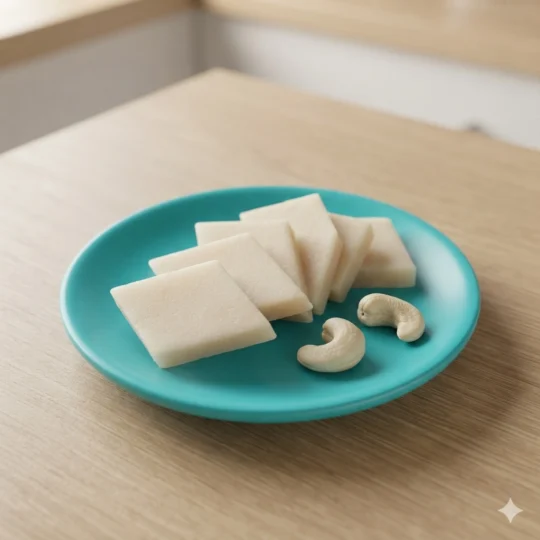
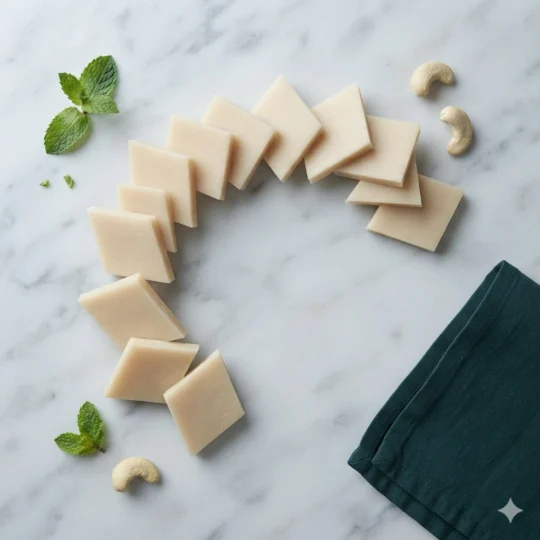
Kaju Katli — Without Vark & Mava
Does this Kaju Katli have the silver leaf on top?
No. This version is made without vark (edible silver leaf), so it stays visually plain rather than finished with a decorative coating.
Is it made with mava (khoya)?
No, mava isn’t used in this recipe either — it’s built around cashew without the khoya-based richness some other katli recipes rely on.
Since it's made without mava, does that mean it's dairy-free?
Not necessarily. “Without mava” only tells you that this particular milk-solid base isn’t used — other dairy ingredients, such as ghee, may still be part of the recipe. A full allergen and dairy breakdown is [INFORMATION REQUIRED] and will be added once confirmed.
How long does a pack stay good for?
60 days from the date of packaging, when stored correctly.
What's the best way to store it?
Keep it in a cool, dry, hygienic place, away from moisture, sunlight, heat and strong odours, and don’t store it near non-food items.
What size does it come in?
It’s sold in a 1 kg pack.
Is this suitable for gifting during festivals?
Yes, it’s commonly served at festive gatherings and used in gifting boxes, and because there’s no vark to flake off during handling, it also travels well for everyday sharing at home or the office.
Is it vegetarian, and is it FSSAI approved?
It’s FSSAI approved (Licence No. 21422850000072). Full vegetarian-suitability confirmation and complete dietary details are [INFORMATION REQUIRED] — please contact us before purchase if this is important to you.
Kaju Katli — Less Sugar, Without Mava
Is this the sugar-free version of your Kaju Katli?
No — it’s important to be clear on this: it uses less sugar than our standard recipe, but sugar is still an ingredient. It hasn’t been formulated or tested as a sugar-free product.
Can someone managing diabetes eat this safely?
This hasn’t been confirmed, so please don’t treat “less sugar” as a guarantee of suitability. If sugar content is a medical consideration for you or someone you’re buying for, check with a healthcare professional before relying on this description.
What's actually different between this and your standard Kaju Katli?
The sugar level is the main difference — this variant uses a reduced quantity compared with our regular recipe. Both are made without mava, so that part of the recipe is unchanged.
Does it still contain mava or vark?
No to both. Like our standard Kaju Katli, this version leaves out mava (khoya) and isn’t finished with vark (silver leaf).
Who tends to prefer this version?
Customers who enjoy kaju katli but find some versions too sweet for regular eating, or who want to buy mithai more often without it feeling like an indulgence every time.
How should I store it, and how long will it last?
Store it in a cool, dry, hygienic place, protected from moisture, sunlight, heat and strong odours. It has a 60-day shelf life from the date of packaging.
What pack size is available?
This variant is sold in a 1 kg pack.
Is it FSSAI approved?
Yes, under Licence No. 21422850000072, manufactured by Vishwas Tasty Center in Indore, Madhya Pradesh.
Gond Dryfruit Laddu
What exactly is "gond" in this laddu?
Gond, also known as edible gum or dinkache, is a traditional ingredient long used in Indian winter sweets. Here it’s combined with A2 cow ghee and moong flour as the base of the laddu.
I've heard this type of laddu is given to new mothers — is that the case here?
It’s traditionally prepared in many Indian households as part of postpartum care for new and breastfeeding mothers. We’re describing that as customary use rather than a medical claim, so if you’re buying it for that purpose, it’s worth checking with a doctor or dietitian given how rich and ghee-heavy the sweet is.
What dry fruits go into it?
Cashew, almonds, pistachio, dried dates (kharak), coconut (gola) and raisins, mixed through the gond-and-ghee base.
Is it very sweet?
It uses less sugar powder than some traditional recipes, though it’s still a rich, ghee-forward sweet overall. Precise sweetness details haven’t been confirmed yet, so that’s [INFORMATION REQUIRED].
How many pieces should I eat at a time?
There’s no fixed rule, but because it’s dense and ghee-rich, one or two pieces a day is a common way families enjoy it. Follow your own dietary needs, and check with a healthcare provider if you have specific concerns.
Are there any preservatives or chemicals in it?
No — it’s made without preservatives or harmful chemicals, and prepared in small batches for a taste closer to homemade.
What's the shelf life and how should I store it?
60 days from the date of packaging. Keep it in a cool, dry, hygienic place, away from moisture, sunlight, heat and strong odours.
Is it FSSAI approved, and what size does it come in?
Yes, FSSAI Licence No. 21422850000072. It’s available in a 1 kg pack.
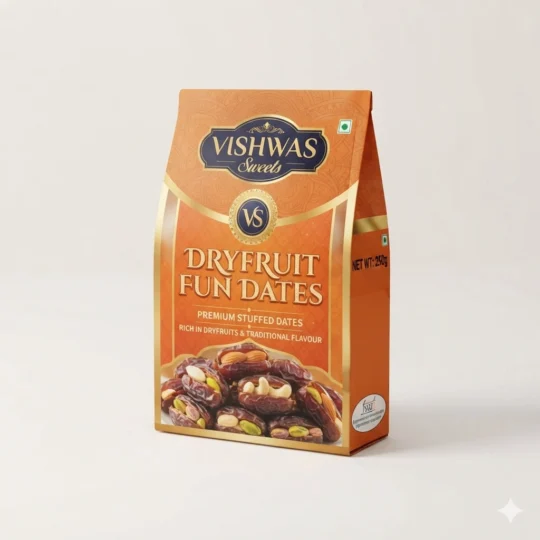
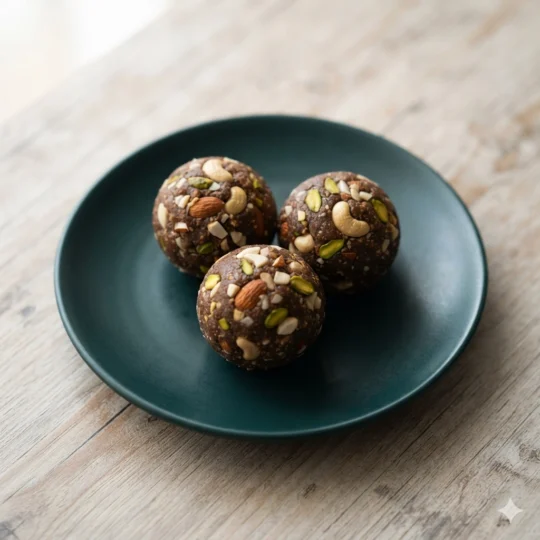
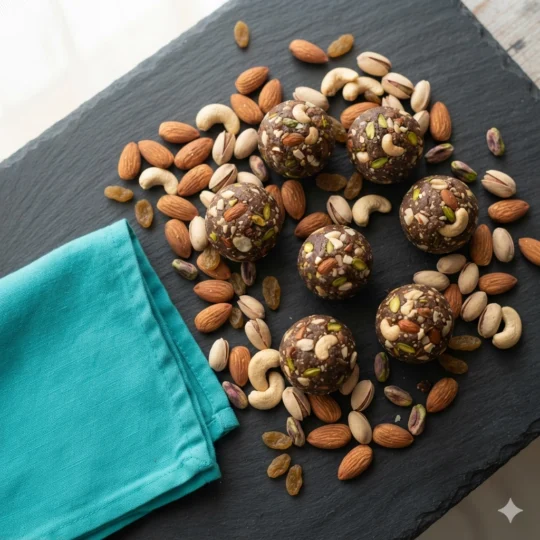
Dryfruit Fun Dates
What's the main ingredient in this sweet?
Dates (khajur), which give the product its name and its place in our Dryfruit Fun range. A complete ingredient list for this specific product is still being confirmed, so that’s currently [INFORMATION REQUIRED].
What does it taste like?
We’re not yet in a position to publish a verified taste and texture description for this product, so that detail is [INFORMATION REQUIRED] for now. We’d rather wait and confirm it accurately than guess.
Does it contain honey or added sugar?
This hasn’t been confirmed for this specific product yet. Please contact us if that detail matters for your order before purchasing.
How is this different from Dryfruit Fun Anjeer?
The two sit side by side in our Dryfruit Fun range — this one is built around dates, while the Anjeer version is built around figs.
How does it compare with your Gond Dryfruit Laddu?
Gond Dryfruit Laddu is centred on gond and A2 cow ghee, with dry fruits mixed in. Dryfruit Fun Dates takes a different approach, putting dates and dry fruit itself in the lead role rather than a ghee-based base.
Is it suitable for vegans or those avoiding gluten?
This hasn’t been confirmed yet, so please get in touch with us for full ingredient details before ordering if either of these matters to you.
What's the shelf life and pack size?
It carries a 60-day shelf life from the date of packaging and is sold in a 1 kg pack.
Is it FSSAI approved?
Yes, under Licence No. 21422850000072, manufactured by Vishwas Tasty Center in Indore, Madhya Pradesh.
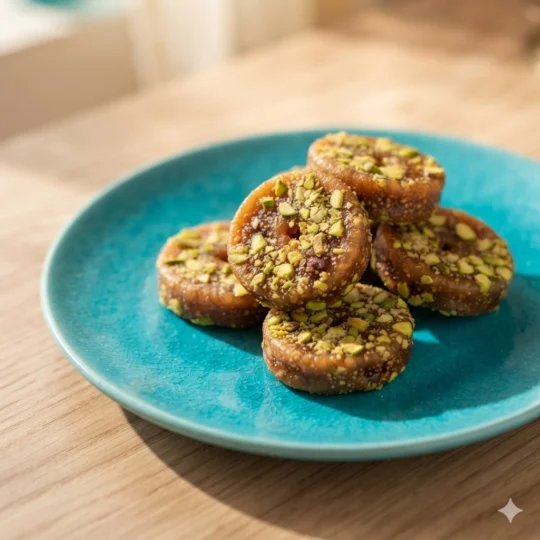
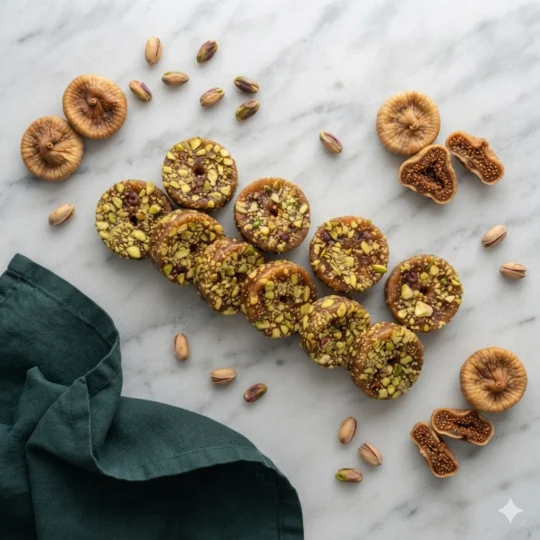
Dryfruit Fun Anjeer
What's the star ingredient here?
Anjeer (fig), which is featured throughout this product and gives it its place in our Dryfruit Fun range. The full, verified ingredient list for this specific product is still being confirmed — currently [INFORMATION REQUIRED].
What can you tell me about the taste and texture?
We haven’t published a verified sensory description for this product yet, so that’s [INFORMATION REQUIRED]. We’re holding off rather than describing a typical anjeer sweet in general terms, since we want this page to reflect this exact product accurately.
Does it contain honey?
This hasn’t been confirmed for this specific product. Please contact us before ordering if that’s relevant to you.
How does it differ from Dryfruit Fun Dates?
They sit in the same range, with the ingredient swapped: this one is built around figs, while Dryfruit Fun Dates is built around dates.
How does it compare with Gond Dryfruit Laddu?
Gond Dryfruit Laddu is built around gond and A2 cow ghee, with dry fruits added into that base. Dryfruit Fun Anjeer instead puts the dry fruit — anjeer — in the lead role.
Would this suit someone following a vegan or gluten-free diet?
That hasn’t been confirmed yet. Please contact us for full ingredient details before purchasing if this matters for your diet.
What's the shelf life and pack size?
60 days from the date of packaging, sold in a 1 kg pack.
Is it FSSAI approved?
Yes, FSSAI Licence No. 21422850000072, manufactured by Vishwas Tasty Center, Indore, Madhya Pradesh.